Call for Chapters in an anthology on “Approaches to Teaching the Work of Edwidge Danticat”
CFP Deadline: 19 December 2016

Continue reading Approaches to Teaching the Work of Edwidge Danticat
Call for Chapters in an anthology on “Approaches to Teaching the Work of Edwidge Danticat”
CFP Deadline: 19 December 2016
Continue reading Approaches to Teaching the Work of Edwidge Danticat
Exploring the Boundaries of Black Intellectual History
The African American Intellectual History Society(AAIHS)
Place: Vanderbilt University
Date: 24-25 March 2017
CFP Deadline: 15 November 2016

Continue reading Exploring the Boundaries of Black Intellectual History
Black and Latin@: Conceptualizing Afro-Latinidad in Afro-Latina/o Literature and Performance
A Special Edition of Label Me Latina/o by Jill Toliver Richardson
CFP Deadline: 4 November 2016 **Deadline Extended to 2 December 2016**

Austin Clarke’s Critical Neglect Panel
Congress of Humanities Conference
Place: Ryerson University, Toronto, Canada
Date: 27 May – 2 June 2017
CFP Deadline: 1 November 2016

Beyond Perpetual Antagonism: Reimagining U.S.-Cuba Relations
11th Conference on Cuban and Cuban-American Studies
Place: Modesto A. Maidique Campus, Miami, Florida
Date: 23- 25 February 2017
CFP Deadline: 31 October 2016
Continue reading Beyond Perpetual Antagonism: Reimagining U.S.-Cuba Relations
Dancehall, Music and the City
Global Reggae Conference
Place: the University of the West Indies, Mona
Date: 9 -11 February 2017
CPF Deadline: 15 November 2016

“Whither the Caribbean?: Stuart Hall’s Intellectual Legacy”
2017 Stuart Hall Conference
Place: University of the West Indies, MONA
Conference: 1-3 January 2017
CFP Deadline: 1 February 2017
 Continue reading Whither the Caribbean?: Stuart Hall’s Intellectual Legacy
Shifting the Geography of Reason XIV: Theorizing Livity, Decolonizing Freedom Jamaica –Summer 2017
Caribbean Philosophical Association
CPF Deadline: 19 December 2016
Revisiting Queer Puerto Rican Sexualities: Queer Futures, Reinventions, and Exclusions
A special issue of CENTRO Journal
Guest Editors: Lawrence La Fountain-Stokes (University of Michigan, Ann Arbor) and Yolanda Martínez-San Miguel (Rutgers, State University of New Jersey, New Brunswick-Piscataway)
CFP Deadline: 15 October 2016

Reading Cuba: An Interdisciplinary Conference on Cuban and Cuban-American Literature
Florida International University
9-10 November 2016
CFP deadline: 1 September 2016
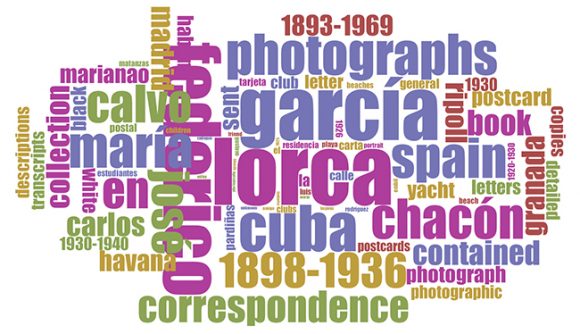
Call for Papers Continue reading Reading Cuba
Call for Papers for a special issue of Caribbean Vistas Journal: Critiques of Caribbean Arts and Cultures
CFP deadline: 1 August 2016
Volume 2.2 (Summer 2017) of Caribbean Vistas Journal: Critiques of Caribbean Arts and Cultures will highlight the work of Caribbean Writers, Performance Artists, and Visual Artists working from Canada.
Caribbean Vistas Journal seeks critical essays on all aspects of Caribbean Writers working from Canada are welcomed entries. Previously unpublished poetry and literary nonfiction from Caribbean artists working from Canada are also welcomed entries. Visual art images and video links to performances by Caribbean artists working from Canada accompanied by artistic statements also will be accepted for publication consideration. Interviews with Caribbean Artists [working from Canada] will be considered as a special feature of Volume 2.2 (Summer 2017). Continue reading Caribbean Writers, Performance Artists, and Visual Artists Working From Canada
Co-Directors Michele Shaul and Kathryn Quinn-Sánchez announce a special edition
of Label Me Latina/o edited by Jill Toliver Richardson
CFP Deadline: 4 November 2016
This special edition focuses on the work of Afro-Latino/a writers who are developing a literary and performance tradition, which delineates an Afro-Latina/o experience in the United States and defines the elements of Afro-Latina/o identity. Afro-Latina/o writers within the United States are producing their own literary tradition that is deeply connected to the experiences of those of African heritage throughout Latin America and the Caribbean. Together they are demanding the recognition of Afro-Latinidad throughout the African diaspora. This issue was conceived in response to recently published texts, including The Afro-Latin@ Reader: History and Culture in the United States edited by Miriam Jiménez Román and Juan Flores 2010 (Duke UP), which examine various elements of Afro-Latinidades and provide diverse conceptualizations of Afro-Latina/o identity within and beyond the U.S. For this special edition of Label Me Latina/o, we are requesting works that identify and explore the most pertinent topics in Afro-Latina/o literature and
performance including but not limited to memory, the body, race, nation, diaspora,
transnationalism, sexuality, gender and spirituality. We are also requesting creative works by Afro-Latina/o writers (US-based) that explore some aspect of the Afro-Latina/o experience. Continue reading Black and Latin@: Conceptualizing Afro-Latinidad in Afro-Latina/o Literature and Performance
Call for Papers for edited anthology:
Teaching Haiti Beyond Literature: Intersectionalities of History, Literature and Culture
CFP deadline: 500 word abstract due by 25 June 2016; Full draft due by 10 January 2017
In “Poem for the Poorest Country in the Western Hemisphere”, poet Danielle Legros Georges chants: “Oh poorest country, this is not your name/ You should be called beacon, and flame.” Haiti, the only country with the last name of “poorest country in the Western hemisphere” is often at the crossroads of either been venerated in History as the First Black Republic or being pitied. Latin American historian Philippe Zacaïr notes that Haiti is “only respected in books as opposed to real life.” The essays in this volume will focus on how to teach about Haiti and its complex history and culture from a transdisciplinary perspective. Its main goal is to provide best practices and practical suggestions for teaching about Haiti from multiple lenses including art, art history, cultural studies, film, gender, history, literature, and sociology to name but a few areas of interest. The volume also seeks critical essays that center on “Fatal assistance” (a term used by filmmaker Raoul Peck) to highlight the problematic of humanitarian aid and NGOs, service learning, volunteerism and disaster tourism in Haiti. Continue reading Teaching Haiti Beyond Literature: Intersectionalities of History, Literature and Culture
Special issue of Caribbean Review of Gender Studies
Guest Editors: Savitri Persaud and Fatimah Jackson-Best
CFP deadlines: Abstracts due by 30 September 2016; Manuscripts due by 6 January 2017
Call for papers
My legs were at a 45 degree angle each. I was in a wheelchair for a while after I had corrective surgery to fix it. This is basically the end result… But it’s fine. It’s cute now. Guys fantasize about it now, because I “walk wine” and girls try to walk like me… Basically, I mean my legs are double jointed. And you can put them in different positions. I’m saying, ‘My vagina is made different, and it will make you feel different, and it will make you feel like it’s not one, but actually two vaginas.’
– Tifa, Jamaican Dancehall Artiste [Interview with thefader.com]
The Caribbean Digital III
a Small Axe Project event
2 December 2016
Barnard College / Columbia University
New York, NY
Deadline for proposals: 15 July 2016
The transformation of the academy by the digital revolution presents challenges to customary ways of learning, teaching, conducting research, interpreting documents and presenting findings. It also offers great opportunities in each of these areas. New media enable oration, graphics, objects, and even embodied performance to supplement existing forms of scholarly production as well as to constitute entirely original platforms. Opportunities for interdisciplinary collaboration have expanded enormously; information has been made more accessible and research made more efficient on multiple levels. Scholars are called upon, with some urgency, to adapt their research and pedagogical methods to an academic climate deluged by a superabundance of information and analysis. This has created opportunities for open-ended and multiform engagements, interactive and continually updating archives and other databases, cartographic applications that enrich places with historical information, and online dialogues with peers and the public. Continue reading The Caribbean Digital III

